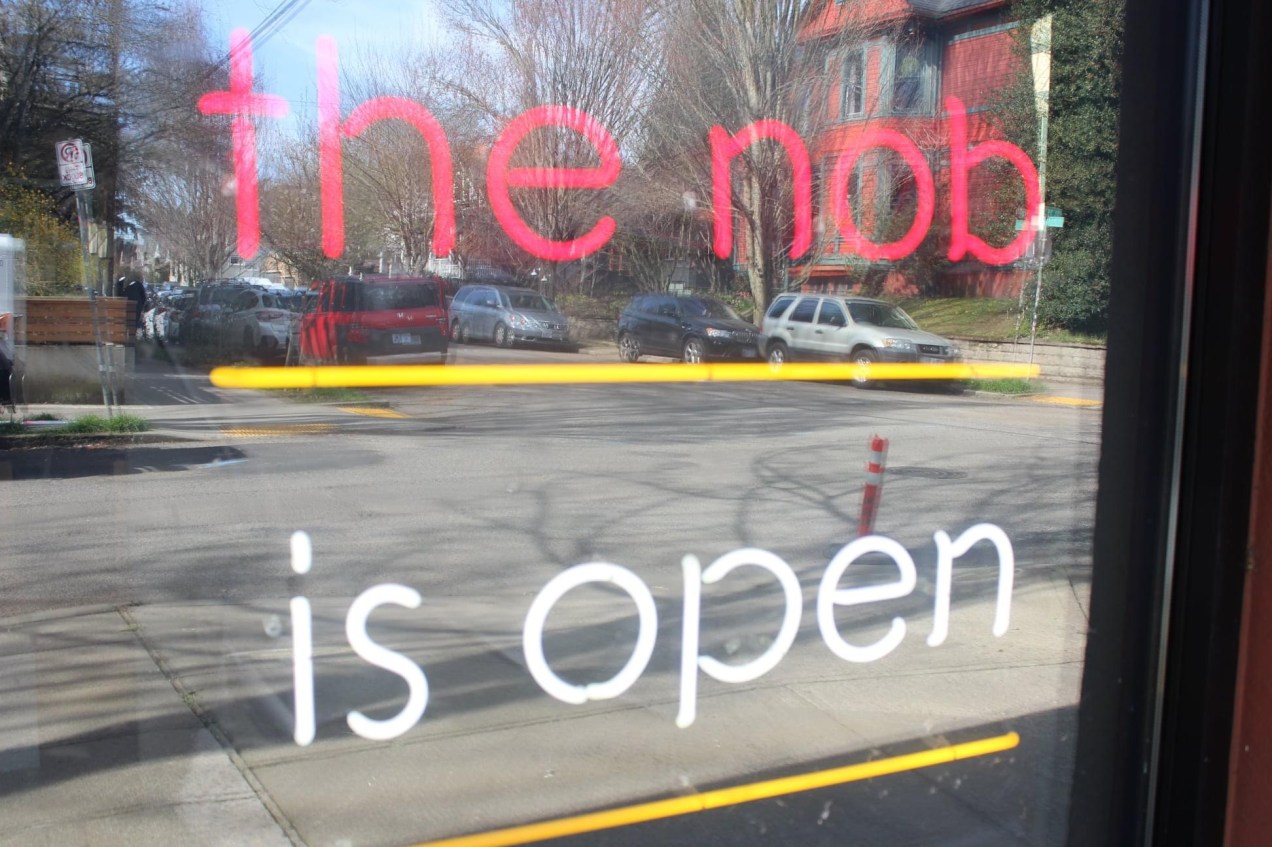
In June 2015, my wife and I moved to Portland, Oregon mostly on a whim. We had both lived in Madison, Wisconsin for the previous decade-plus, and the same old routine was quickly growing stale. So without a ton of thought or research, and taking advantage of our mutual former employer’s recent change to a work-from-home arrangement, we packed up all of our stuff and made the 2,000-mile trip west.
For our first year and a half in the Pacific Northwest, we lived in a lively Southeast Portland neighborhood called Sunnyside, based entirely on the fact that one of our old Wisconsin friends brought us out there when we came for a very brief visit the previous April. During that evening, we discovered that Sunnyside was chock-full of neat-looking bars and restaurants that could be easily accessed on foot within a matter of 10 or 15 minutes, and that’s all we needed to know before we signed a lease on a tiny two-bedroom apartment that we’d never seen before moving in.
In the months that followed, my wife and I did our best to take advantage of all there was to do within the half-mile radius of our home. Sunnyside is where we first played in Portland’s pinball tournaments – an activity that has now become a regular part of our social calendar – and where we first had the greatest bread the city has to offer, at Hoda’s on Belmont and 34th. Most importantly, though, Sunnyside is where I was treated to some of the best and most consistent customer service that I’ve ever experienced, all thanks to the crew at the Hobnob Grille.
Throughout the rest of 2015 and into 2016, the Nob became the number-one spot in Portland where I spent the most time outside my apartment. At first, I mostly just went there because of its terrific food and close proximity. As I became more of a regular, though, I began to notice that the staff at the Nob was treating me a little differently. While they always provided the sort of high-quality service I’ve now come to expect even from Portland’s diviest bars (shout-out to all the wonderful service-industry workers in the Rose City), after my face became more familiar they really stepped things up. To make a ham-fisted comparison, the Hobnob Grille was like Sunnyside’s version of the TV show Cheers, and I was becoming one of its Cliff Clavins.
The service I received at the Nob was so good that I actually took lessons from my time as a valued customer and was able to apply them in my own career in SaaS support. Here, then, are the three service principles to keep in mind when working with your company’s own most valued (and valuable) customers.
Priority – Your best customers should always be served first.
The real irony about my love of the Hobnob is the fact that it was an unabashed Chicago sports bar, which would ordinarily be a significant deterrent for a guy who grew up in Green Bay, Wisconsin. After the bar’s owner, Jeremy, and I respectfully identified our particular sides of the Packers/Bears divider, though, we found common ground in being Midwest transplants to Portland who were both still pretty fanatical about the football teams we grew up watching.
One Sunday morning in the late fall, I made my way to the Nob shortly after 10:00 a.m., which on that day meant I was walking in to a packed house since the Bears game had just kicked off. Looking around the dining area, I didn’t see much seating, but I did see Jeremy waving at me from across the bar. He motioned toward the Nob’s sole empty two-top and yelled that he’d bring me a menu, which he did, along with a freshly made bloody mary, in a matter of a couple minutes. Knowing I had zero time to waste, I quickly decided on an order of biscuits and gravy, gave Jeremy a fist-bump and took a sip of my bloody as I watched the Bears play the Minnesota Vikings (my other least-favorite NFL team, coincidentally).
Before I knew it, I had a steaming plate of delicious breakfast sitting in front of me, which I quickly devoured before settling my bill with a big fat gratuity on top and heading out the door. Of course I thanked Jeremy for the extra-special service, and I’ve obviously never forgotten how that whole situation made me feel. When the Hobnob was as crowded as it could be, the other patrons still got served, but the owner specifically made sure I was being taken care of.
In the world of software support, it’s not much different. Customer support agents are tasked with handling dozens of requests every day they work. Some are easy, one-touch answers to questions or quick functionality explanations, and others require a bit more time and effort to resolve. Some are low-priority tickets that can be completed at your leisure, and others are all-hands-on-deck garbage fires that immediately jump to the top of the list. Some are simple requests from a single user, and others impact a wide group of paying customers.
When everything else is equal, though, your company’s highest-value customers (HVCs) should always have their requests handled first. These are not only the customers who spend the most money with your company, but also the ones who are relied upon as partners as your company plans and develops new product features and other needed improvements. These HVCs have invested a great deal of their time and finances into your company’s products, and thus deserve to move to the front of the line whenever they have a question or a problem. This extra level of care will further strengthen the trust between these HVCs and your support team, and will go a long way to maintaining a lucrative, long-term, mutually beneficial business relationship.
Of course, there will always be situations where your support team must address other customers’ needs first, especially when there is an outage or other significant incident, and if your high-value customers aren’t impacted, that clearly makes sense. Once again, though, when all other factors are equal, the level of commitment HVCs have made in your company earns them the privilege of having their requests managed first.
Premium – Your best customers deserve an extra level of care.
When my wife and I started going to the Nob, we’d sit down, order our food and drinks, chat quietly with each other for awhile, pay our bill and then walk home. Honestly, if that’s the experience we had the entire time we lived in Sunnyside, I wouldn’t have complained. Eventually, though, we began getting some regular visitors to our table about halfway through each meal.
First, Jeremy would step out of his office and do a lap around the bar, glad-handing folks he recognized and making sure everything was running smoothly. What started as a quick “hey how are ya” later turned into several minutes of football banter and bad jokes, and my wife and I really got to know Jeremy beyond just his role as the Hobnob’s proprietor.
A few minutes later, the Nob’s remarkable chef, Brian, would stop by to see how we liked our food. Just like with Jeremy, we initially became familiar with Brian because of his incredible work in the kitchen, but we soon started running into him elsewhere in the neighborhood, where I learned not only that he’s extremely well read, but also that he and I share a mutual affinity for the Mass Effect video game franchise. I could write several more paragraphs about the world-class meals coming out of the kitchen at the Chicago sports bar located in the middle of a Portland neighborhood, including a one-of-a-kind burger Brian made me that literally brought me to tears, but this isn’t a food website.
In software, it doesn’t take much extra effort to personalize your team’s interactions with your company’s HVCs. In many cases, especially in the B2B world, support teams generally speak to the same group of users from each of their customers, and thus have the opportunity to establish the sort of rapport that will lead to productive, lengthy business relationships with your company.
If a request is lingering in your support team’s ticketing system after everyone has exchanged a handful of comments, encourage your team to set up phone calls or screen-sharing sessions with the customers in order to discuss these requests in more efficient detail. If your team finds that a particular HVC has the same request over and over again, you could explore ways to automate the solution or otherwise increase the efficiency with which the repeated requests are completed. And, of course, if a serious problem arises with your company’s product, your team should pro-actively notify all impacted customers, but make a special effort to reach out to your HVCs with as much available information as possible.
This extra level of care will go a long way in building your team’s credibility with HVCs. You can’t control when problems arise with your product – that’s why your company has a support team to begin with – but you can control the friendliness, patience and professionalism your HVCs are treated with when they reach out, even during extremely challenging times. Just like successful restaurants must rely on more than just their food, successful support teams must also provide a premium, even personalized level of support, especially to customers who spend a lot of money.
Preparation – Your team should know who your best customers are, and should be able to expertly resolve their most frequent requests.
While Jeremy and Brian definitely represented the Hobnob well in their efforts to provide a consistent level of excellent service, it was the Nob’s bar manager, Melissa, who really stepped things up. It only took a handful of visits before she knew my name, my wife’s name, that we recently moved to Portland from Wisconsin and that we were old friends with another Hobnob regular, also named Eric. From there, things only got better, and I’ll give two specific examples:
On Wednesdays, the Nob ran a happy hour special from 4:00-7:00 p.m. where all of the draft beers were $2.50. Wednesday was also the evening that my wife joined the erstwhile Portland Belles & Chimes crew for their weekly pinball meet-up, which also started at 7:00. The timing here is significant, because when my wife would leave the apartment at 6:30, I’d start the 10-minute walk to the Hobnob. Arriving shortly before happy hour ended, I’d take my seat at the bar and order a beer. Melissa would pour me that beer, punch it into the register and then also charge me two more beers at happy hour price, even though we both knew I probably wouldn’t finish my first one before 7:00. With that simple gesture, Melissa sliced several dollars off of my tab each Wednesday I visited the Nob (which, of course, all got added to her tip when I paid).
Melissa also had eyes like a hawk, and could always spot me when I was about a block away, walking through the aggressive Saturday-morning mist to get some brunch. I know this because, after I’d been coming in for a few months, she would always – always – have my bloody mary and beer chaser ready to go as soon as I arrived. She also knew that I almost never needed a brunch menu, because whatever weekly special Brian was cooking up in the back was sure to satisfy. By familiarizing herself with her most loyal customers and their usual orders, Melissa not only made her own job a lot easier, but also established herself as one of Portland’s absolute best bartenders, and someone who still gets universal acclaim from folks who see her regularly.
Your support team should put forth this same level of effort to get to know your company’s HVCs, and then to use what they learn to anticipate those customers’ needs. At a bare minimum, your team should either a.) have a dedicated support agent/group for each HVC or b.) require that all of your team’s support agents are deeply familiar with each of your HVCs. Whomever on your team is responsible working with HVCs should not only know the names and general job responsibilities of the customer users who usually work with your team, but they should also be aware of the each HVC’s most frequent requests, pain points and any broader support trends that have emerged during the course of working with them.
One particular HVC, for example, might have a handful of regular users who often need help executing more complex workflows in your company’s product. To make your team’s job easier and to increase the efficiency with which you can resolve this HVC’s help requests, your team could create easy-to-access training material that could be shared with the HVC’s users, rather than having to repeat the same live trainings numerous times. In a simpler example, another HVC might have one or two users who are perhaps less enjoyable to work with, but who still require help on a regular basis. Just having your team be aware of a potentially challenging personality ahead of time will help them more easily manage requests from that customer, as opposed to your agents being taken aback by some sudden unpleasantness.
All good things must come to and end, though. First my wife and I left Sunnyside in 2017 for the comparatively cheaper far-east side of Portland, and thus our visits to the Hobnob Grille shrunk considerably. A few years later, circumstances completely outside of the Hobnob’s control ultimately led to its permanent closure, which was a real bummer even though I hadn’t been going there nearly as often. The space is now occupied by something called Old Pal, which I understand is pretty good, but where I’ve not yet stepped inside. Still, I’ll never forget Jeremy, Brian, Melissa and the rest of the wonderful staff at the Nob. Having now lived in Portland for nearly a decade, my list of places that provide the best service has naturally expanded, but I’ll always compare them to the Hobnob.
In software, customers expect help from support teams when they need it, but they’ll always remember when your team goes above and beyond to make them feel special. Make sure your teams are providing your company’s HVCs with the world-class service they’ve earned through their investment, and implementing the rules of Priority, Premium and Preparation in order to truly excel.
Click here for more “insights” into the world of SaaS support.

